Understanding Differences Between Standard and Heavy Duty Aluminum Foil
During your shopping trip to the supermarket, you might come across a wall of shiny packages, each claiming to keep your food fresh and your pans clean. But the truth is, aluminum foil is not equal throughout. The selection of either standard or heavy duty aluminum foil might result in either the smoking of a juicy brisket or making an oven floor covered with grease. Knowing these physical differences is a must for every home cook and a professional chef.
The Technical Breakdown: Microns and Gauges
The primary distinction between the two kitchen staples is on their thickness. This is typically measured in microns or millimeters of an inch. Both products are constructed with at minimum 92% pure aluminum, their manufacturing process determines their final strength.
- Standard Foil Thickness: The thickness of standard aluminum foil usually measures approximately sixteen microns (0.016mm). The thin profile makes it extremely flexible and folds easily around small containers. It is made for lighter-duty jobs in which structural integrity isn’t the main concern.
- Heavy-Duty Foil Thickness: The thickness of Heavy-Duty foils are considerably more durable, and ranges between 24 and 30 microns (0.024mm to 0.030mm). This is about 50%-80 % more thick than the normal version.
- Tensile Strength and Puncture Resilience: Heavy-duty foil is able to hold higher “mass” per square inch and has a greater tensile strength. It is stretchable further before snapping, and it can withstand punctures from sharp edges, such as bone ends or corners of a baking dish – far superior to its lighter counterpart.
When to Use Standard Aluminum Foil?
Regular foils are an ideal “workhorse” for everyday kitchen maintenance. It’s cost-effective and efficient for tasks involving the maintenance of temperature as well as light wrapping.
Daily Food Storage and Wrapping
If you’re wrapping up sandwiches for lunch or wrapping a bowl of leftovers to keep in the refrigerator, regular foil is the best choice. Its thickness lets it conform around the form of food items or bowls, forming solid seals that stop food odors from entering the food.
Lining Baking Sheets for Cookies
If you are baking at low moisture and moderate temperatures such as baking cookies or warming bread, foil is just the right one. It prevents the food from sticking to the baking tray and makes cleaning very easy. The delicacy and low acid or grease output of cookies do not make the aluminum foil’s thinness a danger.
The Economy Factor
From a financial perspective from a budgetary standpoint, regular foil generally provides more square footage for each dollar. For kitchen chores that aren’t stressful the use of heavy-duty foil will be unnecessary. If the foil isn’t likely to be poked, moved and exposed to high heat, then the regular version is a good option.
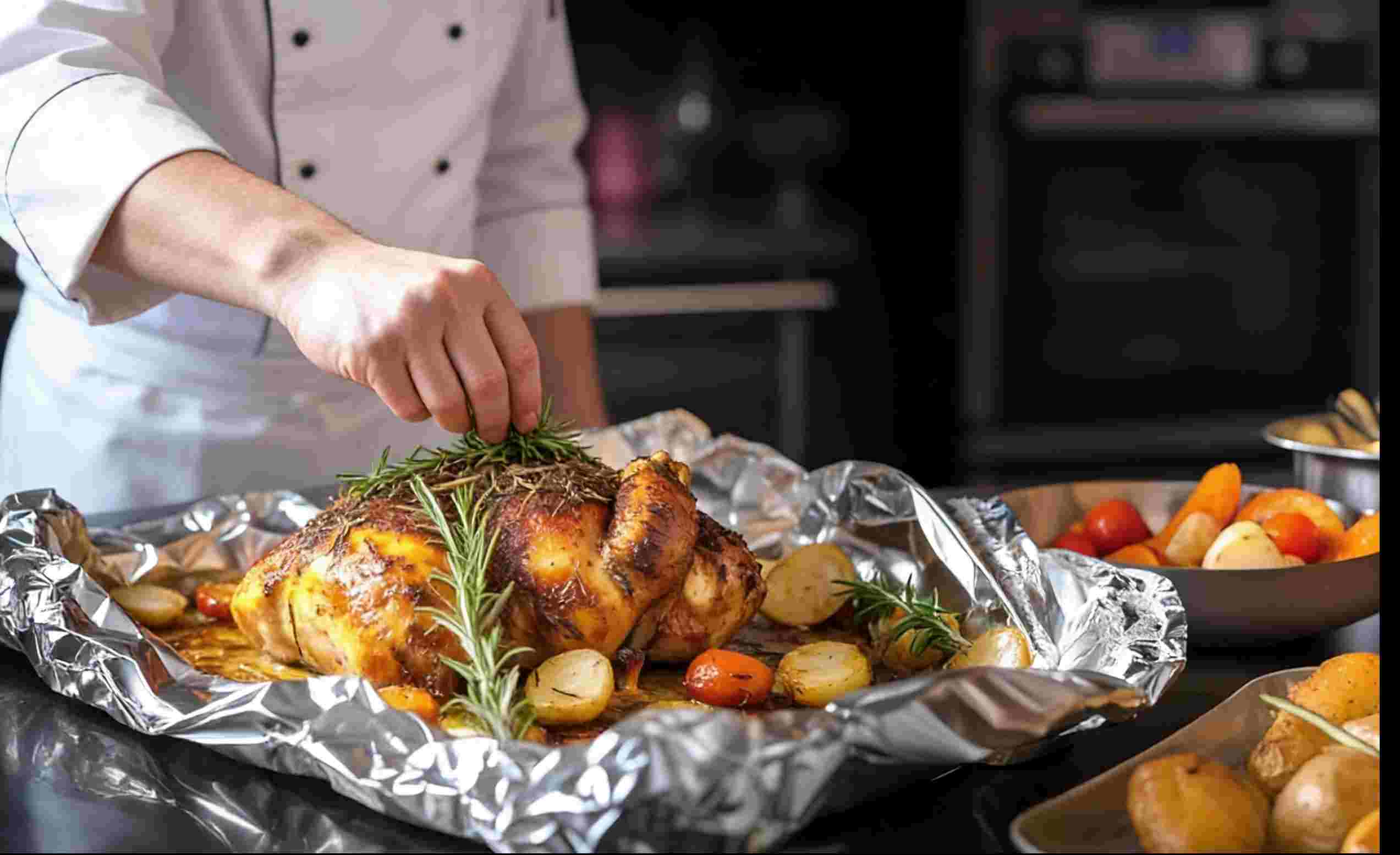
When to Switch to Heavy Duty Aluminum Foil?
Heavy Duty Aluminum Foil is a must-have in the kitchen as soon as the cooking conditions become tough for the standard foil.
High-Heat Grilling and Outdoor BBQ
Standard foil can turn brittle or worse, melt and stick to the grill or smoker grates. This is the harshness that heavy-duty foil is made to endure. It doesn’t matter if you are doing the “Texas Crutch” method with ribs or brisket, heavy-duty foil will be there to wrap without any concern of tearing it when shifting the big meat on the smoker.
Handling Heavy or Sharp Foods
Have you ever faced the situation where a royal roast or a turkey had to be wrapped in ordinary foil only for the bones to puncture it straight away? Heavy-duty foil is bone-piercing-resistant. The strong barrier formed by it retains juices and as a result, it does the thickening of the meat by making the internal steam very hot.
Long-term Freezing and Protection
Air is the main enemy for frozen meals. The standard foil is thin enough that tiny tears could be created during the freezing process which can lead to “freezer burn.” Heavy-duty foil offers greater amount of moisture and oxygen barriers. When wrapping meats to be used for long-term storage in freezers The extra thickness will ensure that the food is protected from harsh cold air.

To assist you in deciding which one to pick For your convenience, here’s an easy reference to the performance indicators of the two types:
| Feature | Standard Aluminum Foil | Heavy Duty Aluminum Foil |
| Puncture Resistance | Low (easily easily) | Very high (resists edge sharpness) |
| Heat Tolerance | Moderate (up to 350degF) | Excellent (Grill secure) |
| Flexibility | High (wraps small objects easily) | Moderate (stiffer to fold) |
| Typical Use Case | Leftovers & Sandwiches | BBQ, Roasting & Freezing |
| Cost Per Foot | Economical | Premium |
Performance Under Pressure: The “Double Up” Myth
There are many people asking: “Is it possible to take two layers of standard foil instead of heavy-duty?” This may be an alternative for covering a pan, but it usually does not match the performance of a single heavy-duty foil.
When standard foil is layered, two delicate surfaces still exist, which can slide against each other. On the contrary, a single heavy-duty roller holds together full structural integrity, which is far more effective in leak prevention and heavy sauces’ usage resistance. In addition, it often results in two standard foils costing more per use than one of the heavy-duty type.
Making the Right Choice for Your Kitchen
Choosing the right aluminum foil isn’t about only price; it is about selecting the right tool for the job. Standard foil is excellent to use in simple and light baking but it is certainly not a heavy-duty foil requirement for anyone who is serious about grilling, roasting, or long-term food preservation. By having both in your pantry, you assure that your kitchen is always efficient, your food is safe and the cleanup is as simple as possible each time.
Contact Lanren — we are able to customize heavy duty aluminum foil for you.
Our materials remain in the best condition possible until it is time to use them!
Related Products